Jun 11, 2010

Gear Favorites


What determines whether you are an amateur or pro photographer...the gear? the places you travel? your ability not to crack under pressure? being able to market yourself? being prepared for any scenario or disaster? the amount of money you make?

Photography is all about an individuals vision and creativity. I firmly believe that some things cannot be taught or bought. You either have the "eye" or you don't. There are pro-photographers out there that can create a beautiful image with a $5 pinhole camera. There are also those that create point-and-shoot images with a camera that's capable of so much more. So gear does NOT make the pro.

Having said that, sometimes the gear is important. Just as you wouldn't shoot a wedding with one camera/lens combo (you wouldn't right?!!! Please don't say you're relying on basic equipment with no backup to capture someones special day!!), the same goes for any type of photography. There is gear that will produce better quality images or sometimes gear that just makes your life easier.

So here's my top 10 "can't live without now that I have them" list:


1) Canon 500mm f/4 IS....when people say it's more important to upgrade your glass before your body, it couldn't be more true. This lens changed everything for me. While I looked at the Canon 400mm f/2.8 IS and the Canon 600mm, the 500mm was perfect considering size/weight restrictions for travel and just carrying around on a daily basis. Do yourself a favour and purchase a Lens Coat for any large lens, it helps protect the lens from minor bumps and scrapes but also is more comfortable to handle. And don't forget a Don Zeck Lens Cap!

2) Canon 1D4....There were a few things I didn't like about the Canon 50D. So when I decided to upgrade my choice was easy. I tried out the Canon 7D, 1D3 and the 1D4. There was no competition, the ID4 is everything I thought it would be, and more. I still love my Canon 5D2 but for wildlife this is always the camera that I grab.

3) Gura Gear Bag....Finally an end to the quest to find the perfect bag. I'm embarrassed to say how many bags I've purchased. But in my defence, none of them had everything I needed or wanted. Finally I've found one. The Gura Gear Kiboko bag weights under 4 pounds which is a huge bonus when carrying around lots of heavy gear. It's durable, easy to clean and can hold a 400mm-600mm lens on one side while using the other side for extra bodies,lens and misc. gear. It's got the most amazing harness system that can be hidden away when straps get in the way while on a plane etc. It fits in the overheads of even the smallest planes. Need I go on?

4) Think Tank Airport Security V.2....Think Tank makes great bags. They are well-made, well-designed and will last forever. If you are constantly toting around lots of gear, there are times that you want a good roller bag and this one has all the features that will make it a favorite.

5) HP Laptop DV7 Series....I7 CPU, 8GB RAM, I TB Drive and portable! I'll never own another desktop again. I would recommend having a 24" or larger extra monitor for home use and then you've got the best of both worlds. Another great addition to the setup is a docking station which allows you to just undo one connector and you're on your way. It also provides extra USB ports, speakers, easy controls etc. While you can argue about PC vs. MAC until the end of time, it's like arguing about Canon vs. Nikon and I can't see anything ever making me switch.

6) Rocketfish Card Reader....While I love my laptop, the one thing I'd love to see HP add is a CF card slot. But since that will probably never happen, this is the next best thing. I transferred photos from the camera to the computer for a long time and it just takes way too long. I tried a couple of card readers that I wasn't all that impressed with. Now the Rocketfish goes everywhere my laptop goes so I can dump my photo's onto the computer; freeing up my memory cards.

7) OP/TECH USA 18" Rainsleeves....Don't bother with expensive rain gear. Nothing beats these for cheap, quick and convenient protection against the elements. I carry these in my photography bag and my "oh shit" kit. That's for another post though.

8) Wimberley....Either the Wimberley WH-200 or the Sidekick are a must with the big telephoto glass. I use both.

9) Gitzo 3541L....I went through lots of tripods before I decided to invest in a quality system. Spend the extra and go with a Carbon Fibre Model especially if you're planning long hikes or lots of travelling. Pair it up with a ballhead that can support the weight of any lens you may want to rent or own in the future. I went with the Kirk BH1 Ballhead and plates for all my bodies and larger lens. It's big, heavy and will never let you down.

10) Singh-Ray Filters....Yes Photoshop is amazing but I love getting it right "in-camera". If you're buying filters, buy quality. The Vari-N-Duo is one of my favorite filters. Then there's the soft and hard GND's, and specialty filters like the "Blue & Gold" or the "Color Combo".

11) Think Tank Pixel Pocket Rocket....Yes I can count, I know I said "10 Favorite Things" but I couldn't leave this one off the list!!

12) Epson P-7000....160GB Media Viewer. Backup all your files in the field directly from your memory card. There are cheaper units but Epson makes the best!

13) Columbia Bugathermo Boots....another one to add, finally boots that can keep feet warm and dry even in a brutal canadian winter! They have built-in rechargeable heaters and you can choose between 3 temperature settings. Awesome. These "ALMOST" make me look forward to winter :)

14) Skimmer Ground Pod & Skimmer Sack....The ground pod is perfect for ground-level photography especially on a beach or around mud/water. Rugged and lightweight, it's circular design allows you to slide your equipment in any direction on many types of surfaces. The Skimmer Sack can be used in many different types of situations and becomes particularly helpful when shooting from a car. Put the sack over the window and then rest the ground pod with your ballhead right on top. Great stability!

May 13, 2010

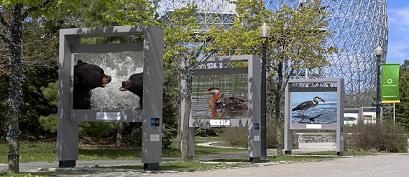
Montreal Biosphere Exhibit


Photo Credit: Biosphere - Hugues Bureau-St-Pierre


Montreal Biosphère "Tightly Knit" Biodiversity Exhibit May 22/2010 - April 30/2011

This outdoor exhibit of giant photos reveals how photographers see and experience nature.


The Biosphère is mounting this exhibit as part of the International Year of Biodiversity. All of the photographs, which are complemented by literary essays and video clips, provide a touching illustration of the vast and rich Canadian biodiversity and the importance of each species for ecosystem balance and health.


Venice Rookery


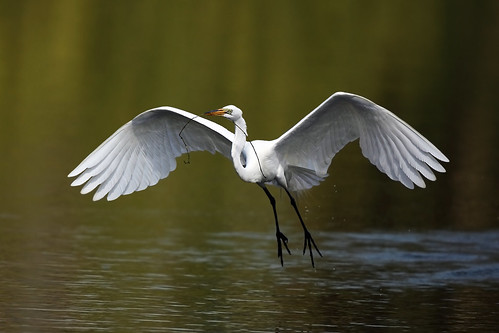
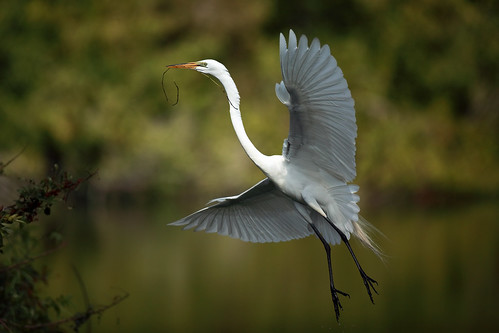
If you are ever in the Venice/Sarasota area in Florida especially from March-June...make sure you check out the Venice Rookery. Each year on my Florida trip I spend as many mornings there as possible watching a variety of waterbirds flying back and forth from their nests collecting nesting material.

Some of my favorites from this year:


Apr 21, 2010

Gatorland in Orlando, Florida

I had a fantastic time in Florida with some amazing sightings. Of course the Burrowing Owls were my first stop, but I also made time for visits to the Venice Rookery, Gatorland, Ding Darling, Punta Gorda, Cape Coral, Myakka, The Celery Fields, Venice Jetty, Hart's Landing, New Pass, and a local Bald Eagles nest. I also made time for lots of local beaches, meeting up with a few friends and of course time to enjoy the pool! Early mornings and late nights....once I was home I spent a week just recovering from my "vacation".
Florida has so much to offer....all the wild birds/animals in natural surroundings . I usually visit the Lowry Zoo when I'm in the area but just couldn't tear myself away from all the wildlife this year. I'm not becoming a "wild snob" since I still enjoy "controlled" shooting at some wonderful rehab places....but I'm just not into visiting zoo's lately. Actually the Controlled shooting at Mountsberg, MWC, JCW and Flight Workshops in Simcoe really helped give me the experience I needed to use "in the field".

Shooting At Gatorland:
When the rain started, most of the photographers left. I'm not talking about just a bit of rain, it was POURING. Enough rain to soak you within moments. The ones that did stay...kept dry under the shelter. I guess they were hoping it would stop. It didn't.

I was the only nut that kept shooting with a HUGE smile on my face. I love shooting in the rain...and I had Gatorland all to myself. So what if I had to empty the water out of my shoes? So what if I had to sit in the car for over an hour absolutely drenched? It wasn't my car ;)


Apr 13, 2010

The Burrowing Owls Of Cape Coral

What a busy year so far...one trip down and a few more to go. In March I spent a few weeks in Florida and the main objective was to find and photograph Burrowing Owls. I was not disappointed!


Burrowing Owls can be seen in many areas of Florida with the largest population occurring on the island of Cape Coral. As of February 2010, it was estimated that at least 1,100 of these owls inhabit the island and there are more than 2500 burrows. Exact numbers are difficult because couples may have more than one burrow.


I visited more than 50 different burrows, and often I put down the camera to just watch them and focus on their interesting behaviours.


Two of the burrows I visited were actually on someones front lawn. There were three owls at that site and they were very active. At one point one of them let out an awful scream and I looked up to see a cat slinking across the yard. Two of the owls flew off, landing on the homeowners roof and were standing on their extended legs and bobbing their heads. One female stayed at the entrance to her burrow and crouched down so she wouldn't be seen. The cat left in a hurry.


I spent my time in Cape Coral crawling along the ground and trying to get to the owls' eye level. Lots of fun considering they are only 8-9 inches tall!! I was told they eat fire ants. Wish the ones I'd been photographing were hungry because the ants were everywhere and I didn't watch where I was laying down ;)


To counter the owls' disappearing habitat, the Cape Coral Friends Of Wildlife (CCFW) recruit volunteers to build started burrows and maintain the burrows now in use. If grass grows too high around the burrows, it can obscure the owls' view of predators. So far the group has about 90 volunteers monitoring 400 burrows.


I had the pleasure of meeting Nelson who keeps a very close eye on his two burrows and was able to provide me with a lot of information on the owls and his observations. He has watched three pairs breed and raise their young over the years. Thanks Nelson...looking forward to my next trip, I'll be giving you a shout!!


Burrowing Owl Information:


The nesting season begins in late March or April in North America. Burrowing Owls are usually monogamous, but occasionally a male will have two mates. During the nesting season, they will collect a wide variety of materials to line their nest, some of which are left around the entrance to the burrow. The most common material is mammal dung, usually from cattle. At one time it was incorrectly thought that the dung helped to mask the scent of the juvenile owls, but researchers now believe the dung helps to control the microclimate inside the burrow and to attract insects, which the owls may eat.


The female will lay an egg every 1 or 2 days until she has completed a clutch, which can consist of 4-12 eggs (usually 9). She will then incubate the eggs for three to four weeks while the male brings her food. After the eggs hatch, both parents will feed the chicks. Four weeks after hatching, the chicks are able to make short flights and begin leaving the nest burrow. The parents will still help feed the chicks for 1 to 3 months. While most of the eggs will hatch, only four or five chicks usually survive to leave the nest.


Owls are very site specific, which means they are likely to return to the same territory year after year to raise their young. If the burrow is damaged by humans or natural causes, becomes too over grown, or if the owls are continuously harassed at their current location, they will often move to a nearby area to start a new nest.


Where the presence of Burrowing Owls conflicts with development interests, a passive relocation technique has been applied successfully. Rather than capturing the birds and transporting them to a new site (which may be stressful and prone to failure), the owls are half-coerced, half-enticed to move on their own accord. The preparations need to start several months prior to the anticipated disturbance while observing the owl colony and noting especially their local movements and site preferences.


After choosing a location nearby that has suitable ground and provides good Burrowing Owl breeding habitat, this new site is enhanced by adding burrows, perches, etc. Once the owls have accustomed to the changes and are found to be interested in the location they are prevented from entering the old burrows with a one-way trapdoor. This should only be attempted before breeding season starts. If everything has been correctly prepared, the owl colony will move over to the new site in the course of a few nights at most. It will need to be monitored carefully for the following months or until the major human construction nearby has ended.


This species is able to live for at least 9 years in the wild and over 10 years in captivity. They are often killed by vehicles when crossing roads, and have many natural enemies including coyotes,badgers and snakes. They are also killed by both feral and domestic cats and dogs.


Males and females are similar in size and appearance. Females tend to be a bit heavier, but males usually have longer linear measurements. Adult males appear lighter in color than females because they spend more time outside the burrow during daylight hours and their feathers become sun-bleached.


Burrowing Owls range from the southern portion of the western Canadian provinces through southern Mexico and western Central America. They are also found in many Caribbean Islands. In South America, they are patchy in the northwest and through the Andes, but widely distributed from southern Brazil to Patagonia and Tierra del Fuego. Burrowing Owls are year-round residents in most of their range. Birds that breed in Canada and the northern USA usually migrate south to Mexico and southern United States during winter months.


The Burrowing Owl is endangered in Canada, threatened in Mexico, and a species of special concern in Florida and most of the western USA. It is a state endangered species in Colorado. The major reasons for declining populations in North America are control programs for prairie dogs and loss of habitat. Burrowing Owls will readily inhabit some anthropogenic landscapes such as airport grasslands or golf courses. Genetic analysis of the two North American subspecies indicates that inbreeding is not a problem within those populations.